


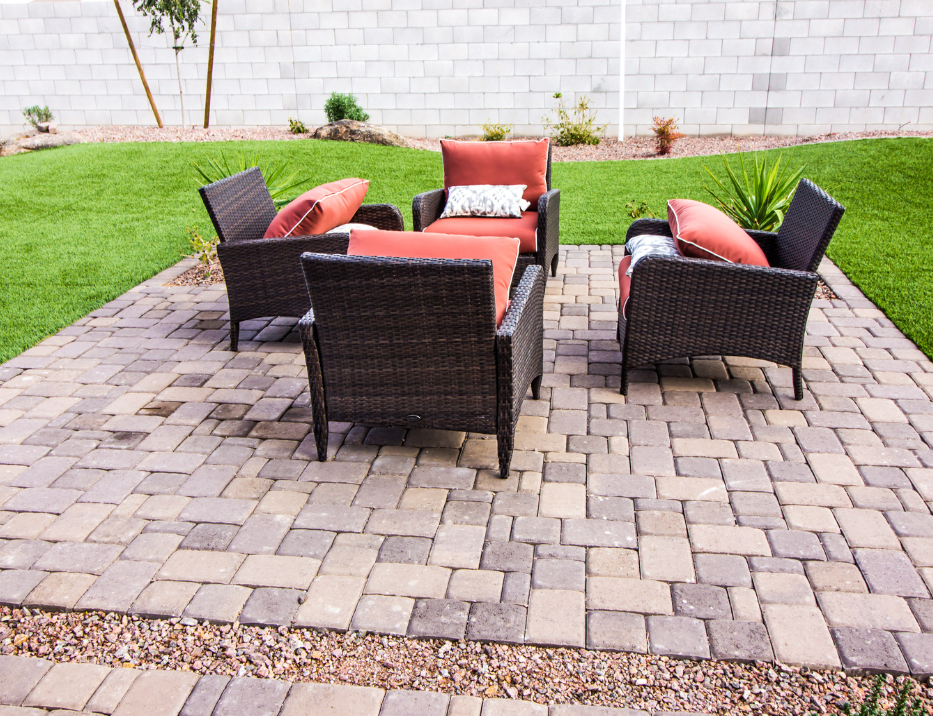
The sand between patio pavers does more than fill narrow gaps. Paver joint sand helps lock stones together, supports their edges, and helps the surface act as one field rather than a set of loose blocks.
The Pavers Start to Move
When joint sand washes out, the stones lose side support. At first, you may see a few low lines or gaps. Soon, pavers can slide, spread, or rock when stepped on.
Movement often starts near a downspout, drain, patio edge, or low spot where water flows often. One loose paver can place more stress on the pavers next to it, which lets the issue spread.
Open joints can turn a firm patio into a shifting surface. Do not wait until stones sit out of line; check low joints as soon as you spot them.
Water Reaches the Bedding Layer
Paver joint sand helps limit how much loose soil and debris move down into the system. When it is gone, water can carry fine material into the gaps. That may disturb the bedding layer below the pavers.
A weak bedding layer can cause a paver to tilt or sink. If water also reaches the base, the ground below may soften or wash away in one spot. The surface may then hold more water, which leads to more sand loss.
A low joint can be a sign of trouble below the surface. Refill it only after you check where the water came from and where it went.
Weeds and Ants Move In
Empty joints become a place for soil, seeds, and debris to settle. Weeds may grow in the gaps and force them wider as roots spread. Ants may also move sand while they build nests under or between the pavers.
Pulling weeds may make the patio look better, but it will not restore the joint support. Ant control may help in some cases, yet you still need to refill and compact the joints once the water path is fixed.
Watch for these signs:
- Gaps that collect dirt after rain
- Weed growth between pavers
- Small piles of sand near joint lines
- Ant hills at patio edges
- Pavers that sound hollow or shift underfoot
Growth in the joints often follows sand loss, not the other way around. Solve the drainage issue and restore the joint fill as part of the same repair.
The Patio May Drain Poorly
A patio with missing sand can develop uneven lines and low spots. Water then follows those gaps and settles in dips. This can speed up washout, especially if roof water or a hose flow runs across the surface.
Do a gentle hose test after the patio has dried. Watch where water runs and where it pools. If water crosses the joints with force or sits in one spot, the issue may be more than missing sand.
Sand washout often points to poor water control. A downspout extension, drain repair, slope fix, or base reset may be needed before fresh joint sand goes in.
Freeze-Thaw Can Make the Damage Worse
Water in open joints and a wet base can freeze as cold weather sets in. That may lift pavers, widen gaps, or leave a low area once the ice melts. A patio that had only a few bare joints in fall may look far worse in spring.
This is why joint loss deserves fast care before winter. The right repair depends on the damage. Some patios need a clean and refill. Others need pavers lifted so the bedding and base can be restored.
Winter can turn a minor washout into a full reset job. A prompt check may help protect more of the existing surface.
Why Fresh Sand May Fail Again
Fresh paver joint sand will not last if the cause of the washout stays in place. Strong water flow, a blocked drain, low pavers, loose edges, or an unstable base can wash out new sand just as fast as the old material.
The repair process should start with the source. Once water has a safe route, the old failed sand and debris can be removed. The joints must be clean and dry enough for the selected sand, then filled and compacted as the product guide calls for.
The prep work decides how long the new sand lasts. Rushing the fill stage can lead to early gaps, haze, or more washout.
Epic Paving explains that repairs may include lifting affected stones, fixing the gravel or sand below, compacting the base, and refilling joints with fresh polymer sand. Read its guide on driveway shifts and fall puddles and see what helps support a long paver patio life span.
If your patio has low joints, loose stones, weeds in the gaps, or sand that keeps washing away, contact Epic Paving for a site review. Their team can trace the water flow, check the base and edges, then plan the right repair for the affected area. A proper paver joint sand repair can help lock the surface back in place before water and winter weather make the damage worse. Talk with Epic Paving about a repair that treats the cause, not just the gap.


